
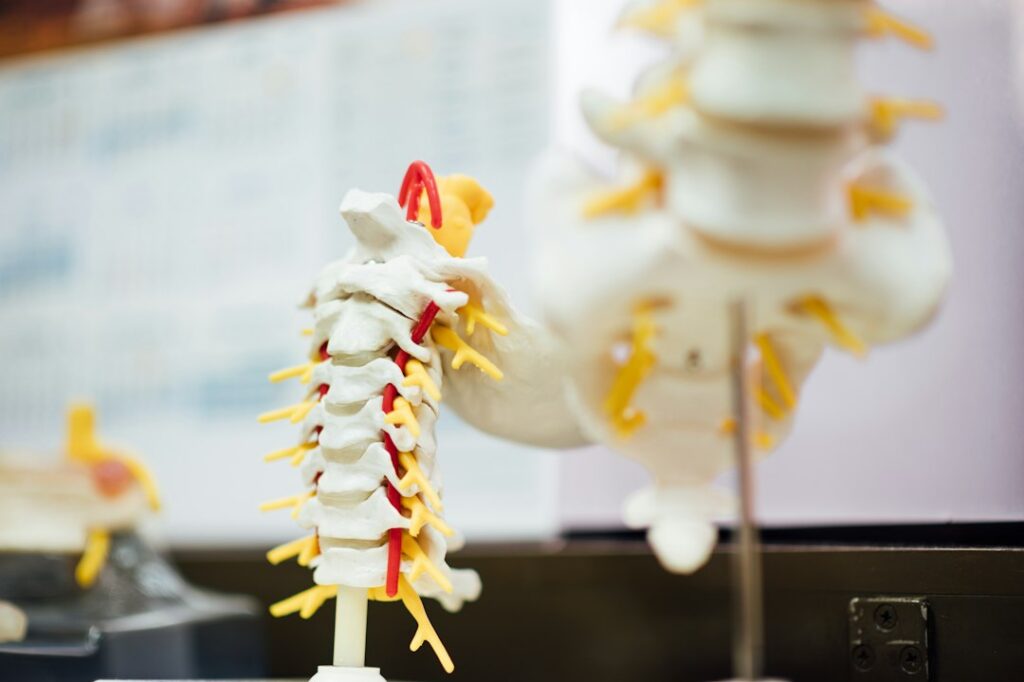
What does “subluxation” mean?
A subluxation is a partial loss of normal alignment or movement at a joint. The word can mean different things depending on the medical setting, so understanding the context matters.
In general medicine, a subluxation usually describes a joint that is partly displaced but not completely dislocated. This may occur after an injury and can involve visible changes on imaging, joint instability, pain, swelling, or restricted movement.
In chiropractic care, “vertebral subluxation” is often used more broadly to describe a problem involving spinal-joint motion, surrounding muscles, posture, or mechanical function. In that context, it does not necessarily mean that a vertebra has dramatically slipped out of place. A person can have painful or limited spinal movement without having a bone visibly displaced.
That difference in terminology is one reason patients may hear the word and come away with very different impressions.
Is a subluxation the same as a dislocation?
No. A dislocation means the bones forming a joint have been forced completely out of their normal relationship. A subluxation is partial or incomplete displacement.
A true traumatic subluxation can be serious, especially if it affects the neck, spine, shoulder, hip, or knee. It may occur after a fall, collision, sports injury, or forceful twisting motion. Symptoms can include:
- Sudden pain
- Swelling or bruising
- A feeling that the joint is unstable
- Difficulty bearing weight or using the affected limb
- Numbness, tingling, or weakness
- A visibly unusual position
A suspected traumatic injury should not be self-treated with forceful stretching or manipulation. Immobilizing the area and obtaining prompt medical evaluation may be necessary, particularly when there is deformity, severe pain, loss of strength, or altered sensation.
What does a chiropractor usually mean by spinal subluxation?
In chiropractic discussions, the term often refers to altered movement or function in one or more spinal joints. A practitioner may assess how the spine moves, whether muscles are guarding an area, how posture changes under load, and whether certain movements reproduce symptoms.
This is different from claiming that every ache is caused by a bone being “out of place.” The spine is designed to move, and small variations in posture or joint position occur throughout the day. Sitting at a computer, carrying a child, shoveling, lifting during a home project, or sleeping awkwardly can temporarily change how the muscles and joints coordinate.
A careful assessment should connect the finding to symptoms and function. It should also consider other possible causes, including muscle strain, arthritis, disc problems, nerve irritation, fracture, infection, or inflammatory disease.
Why might a subluxation matter?
A joint that is painful, stiff, or moving poorly can affect nearby tissues. Muscles may tighten to protect the area, movement may become less efficient, and a person may begin compensating with other parts of the body.
For example, limited movement in the upper back may lead someone to turn the neck or shoulders more than usual. A sore low back may change the way a person bends, walks, or gets out of a chair. These adaptations can increase fatigue and make ordinary tasks more uncomfortable.
The significance is not determined by the label alone. What matters is:
- What caused the problem
- Whether the joint is stable
- Whether nerves are affected
- How much movement and strength have changed
- Whether symptoms are improving, stable, or worsening
- Whether there are signs of a more serious condition
A mild movement restriction after prolonged sitting is very different from a spinal injury after a fall.
Can a subluxation cause pain, numbness, or headaches?
It can be associated with pain and stiffness, but the symptoms do not prove that a subluxation is the cause. Back or neck discomfort may come from muscles, ligaments, discs, joints, nerves, or several structures at once.
Numbness, tingling, burning pain, or weakness deserves particular attention because these symptoms can indicate irritation or compression of a nerve. Headaches may also have several causes. Some are related to neck muscles and joints, while others are associated with migraine, illness, blood pressure changes, vision problems, or other conditions.
A symptom-based evaluation is more useful than assuming that one spinal finding explains every complaint.
How is a suspected subluxation evaluated?
Evaluation usually begins with a health history and physical examination. Important details include when symptoms started, whether there was trauma, which movements make them better or worse, and whether there are neurological symptoms.
An examination may include checking:
- Spinal and joint range of motion
- Muscle tenderness and guarding
- Strength and reflexes
- Sensation in the arms or legs
- Balance and walking
- Signs of instability or structural injury

Imaging is not automatically needed for every episode of back or neck pain. It may be considered when there has been significant trauma, persistent or progressive symptoms, suspected fracture, neurological changes, or concern about an underlying disease. An X-ray, MRI, or other study answers different questions, so the choice depends on the situation.
An image showing a small alignment variation does not automatically identify the source of pain. Many changes seen on scans are common in people who have no symptoms.
Is spinal manipulation safe for everyone?
Spinal manipulation is not appropriate in every situation. It may require additional caution or avoidance when a person has a fracture, severe osteoporosis, certain inflammatory conditions, infection, active cancer affecting the spine, significant instability, or progressive neurological symptoms.
Neck manipulation deserves especially careful screening because the neck contains the spinal cord, major blood vessels, and sensitive nerve structures. Serious complications are uncommon, but they can be severe. A thorough history and examination are essential before any forceful technique is considered.
People should disclose recent injuries, surgeries, blood-thinning medication, bone disease, cancer history, unexplained weight loss, fever, and changes in bladder or bowel control.
When is back or neck pain an urgent concern?
Some symptoms require prompt medical attention rather than routine self-care. These include:
- New loss of bladder or bowel control
- Numbness in the groin or inner thighs
- Significant or worsening weakness
- Inability to walk normally after an injury
- Severe pain after a fall or collision
- Fever with intense spinal pain
- Unexplained weight loss with persistent pain
- A history of cancer with new spinal symptoms
- Sudden severe headache, confusion, fainting, or vision changes
Seasonal conditions can also create practical risks for local residents. Wet leaves, icy walkways, uneven surfaces, and winter lifting tasks may contribute to falls or sudden strains. After a hard fall, severe pain or neurological symptoms should not be assumed to be a routine “misalignment.”
What is the most useful way to think about subluxation?
“Subluxation” is a descriptive term, not a complete explanation. In a traumatic injury, it may refer to partial joint displacement that needs medical assessment. In chiropractic care, it may describe altered spinal motion or mechanical function.
The important questions are whether the finding is supported by the examination, whether it explains the person’s symptoms, and whether more serious causes have been considered. Clear communication about which definition is being used can help patients make informed decisions about evaluation and care.
